
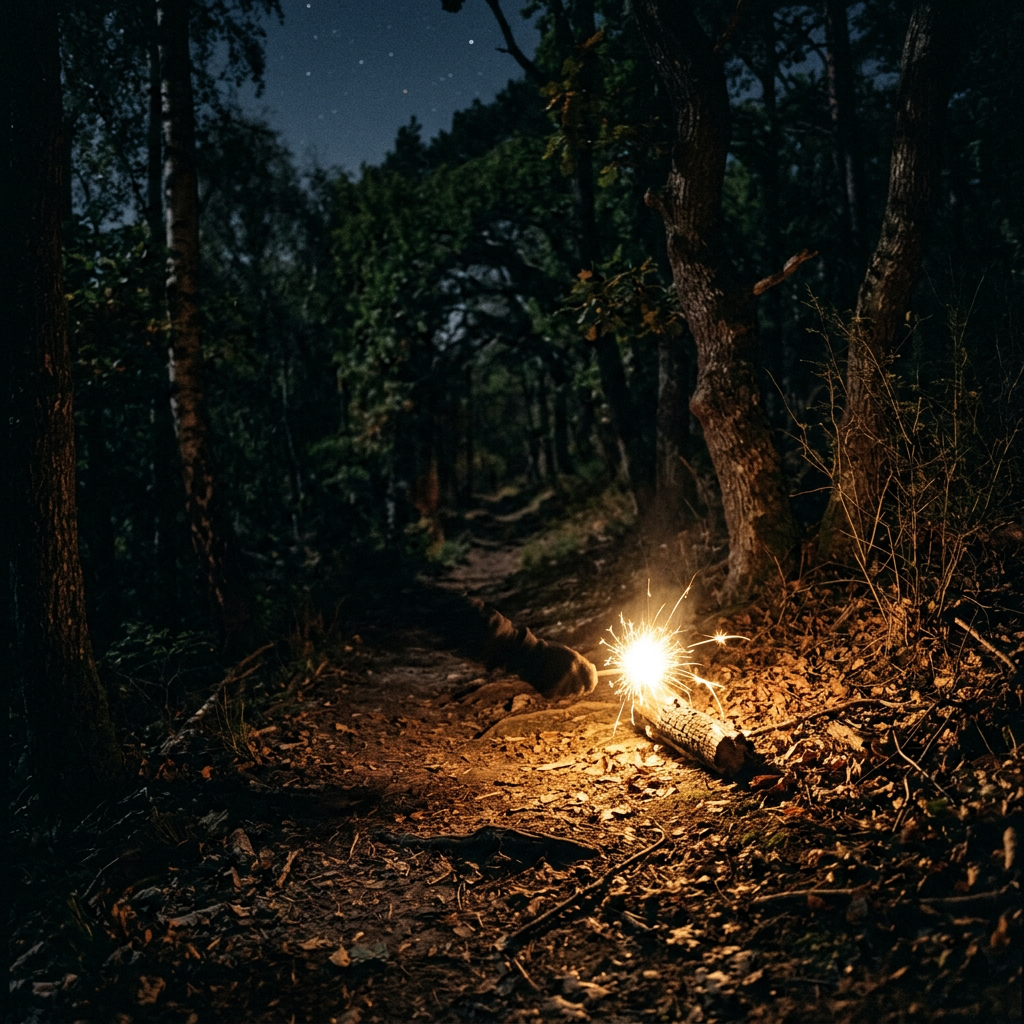
The Spark That Fades
There are seasons when imagination feels like a distant shore — visible, but unreachable. The words don’t come, the ideas feel thin, and the world seems louder than the quiet place where stories are born. Every writer knows that silence. It’s not the end of creativity; it’s the pause before something new begins.
Prompt 1 — “The Forgotten Door”
Close your eyes and imagine that a door has appeared in front of you. Let yourself stand in front of it for a moment. Notice the way your body reacts: curiosity, hesitation, a flicker of fear, a spark of wonder.
Now ask yourself:
Why does it appear now, in this moment of your life or your character’s life?
What’s behind it?
Who built it?
This prompt works because it taps into one of the oldest instincts in storytelling: the desire to cross a threshold. I use something similar in my Lumenvale story. Elara has a literal door appear that transports her to another world that she belongs in.
Every myth, every fairy tale, every hero’s journey begins with a doorway. When you imagine a door that shouldn’t exist, your mind automatically begins to fill in the mystery. You start asking questions, and questions are the birthplace of stories.
To deepen the exercise, focus on sensory detail. Let the door become real:
- What is it made of — wood, stone, metal, something you can’t name?
- Is it warm or cold beneath your fingertips?
- Does it smell like cedar, dust, rain, or something ancient?
- When you press your ear to it, do you hear silence… or something moving on the other side?
- When you open it, do the hinges groan, whisper, or sing?
The more sensory detail you allow, the more your imagination wakes up. Sensory writing bypasses logic and goes straight to instinct and instinct is where creativity thrives.
This prompt also helps writers rediscover wonder. As adults, we’re trained to explain things, to make sense of them, to stay grounded. But creativity lives in the places that don’t make sense yet. A mysterious door gives you permission to step into the unknown without needing to justify it.
And when you finally cross the threshold you’re practicing the courage that all storytelling requires: the courage to follow something you don’t fully understand.
Here’s a short example of how you might begin a story from this prompt:
The door stood where my bookshelf should have been, tall and narrow, carved with symbols that shifted when I tried to focus on them. A faint light glowed beneath the frame, pulsing like a heartbeat. I didn’t remember building it. I didn’t remember wanting it. But the moment my hand touched the handle, I knew it had been waiting for me far longer than I had been searching for it.
This is the power of the forgotten door: it doesn’t just open into a story, but opens into possibility.
Prompt 2 — “The Object That Remembers”
For our next exercise, choose an item. It can be absolutely anyting. Now, imagine this object holds memories.
Whose memory? What does it remember that humans have forgotten?
One of the quiet superpowers of this prompt is the way it teaches empathy. When you give an object a memory you’re stepping outside your own perspective and into something entirely other. You’re imagining the world through non‑human eyes, through a consciousness that doesn’t think or feel the way you do.
That shift is powerful. It stretches your imagination in ways that ordinary writing exercises don’t.
Objects witness us. They outlast us. They hold pieces of our lives long after we’ve forgotten them.
When you ask an object to speak, you’re practicing the art of listening, not to logic, but to intuition. You’re learning to sense the emotional residue of things, the way a scarf might hold warmth, or a key might hold longing, or a seashell might hold the echo of a world it can never return to.
This kind of writing also taps into the heart of mythic storytelling. In myths, objects are never just objects. They carry history, power, memory, and meaning:
- A sword remembers every hand that held it.
- A river stone remembers the shape of the water.
- A lantern remembers every traveler who trusted its light.
When you write from the perspective of an object, you’re stepping into that ancient tradition, the belief that the world is alive, aware, and full of stories waiting to be heard.
It’s not just an exercise in creativity. It’s an exercise in seeing differently.
Prompt 3 — “The Character Who Waited”
Is there a character that you left behind? Maybe you started writing about a character and just move on with no more story to tell. Pretend that character has still been living their life with out you.
Ask yourself: What have they been doing while you were gone? What do they want to tell you now?
Stepping back into a character’s world serves as an essential bridge for writers to reconnect with their emotional core. When we immerse ourselves in the lives of our characters, we are not merely observing their stories; we are living them. This process is akin to what I often express: “Then I step inside that character. I feel their story. I see their life.” This encapsulates the transformative journey that writing can facilitate.
As writers delve into the intricacies of their characters’ experiences, they access emotions that may have been buried under the routine of everyday life. Each character embodies a different facet of human experience whether it’s joy, pain, love, or loss. By stepping into their shoes, writers unlock reservoirs of empathy and imagination that can spark creativity. This act of feeling their story compels us to recall our own experiences, mirroring our personal emotions and adding depth to our writing.
Furthermore, engaging with a character’s world allows writers to explore complex themes like identity, conflict, and connection. By navigating the challenges and triumphs of the characters, writers can reflect on their own lives, fostering a deeper understanding of the human condition. This reflection often leads to a revitalization of one’s own emotions, as we recognize that our characters’ journeys resonate with our truths and struggles.
The practice of stepping back into a character’s world not only enhances our storytelling but also enriches our emotional landscape. It reignites our imagination, invigorating our writing with authenticity and sincerity. Through this empathetic engagement, writers can craft narratives that not only captivate readers but also encapsulate the richness of human experience, reminding us of the power of stories to heal and connect.
Prompt 4 — “The Place That Dreams”
Imagine a setting that dreams.
For Example: a forest that remembers its past, a city that dreams of being wild again, or a house that dreams of being lived in. Write from the perspective of the place itself.
The prompt serves as a tool for enriching worldbuilding and enhancing atmosphere within a narrative. By focusing on the emotional weight and memories that landscapes can embody, we create a deeper connection between the setting and the characters who inhabit it. In mythic storytelling, landscapes are often personified, acting as characters themselves that reflect the emotions and histories of those who traverse them. This ties into the larger tapestry of the narrative, where places carry the scars of ancient battles, the whispers of lost love, and the quiet sorrow of time passing.
For instance, consider a forest that stands as a testament to forgotten oaths. Its towering trees don’t merely provide shelter; they guard secrets and echo the laughter of children who once played beneath their branches. Such imagery transforms the landscape into a living entity, presiding over the actions and fates of the characters, thereby enhancing the mythic tone of the story. When landscapes hold the weight of emotion and memory, they invite readers to immerse themselves more fully in the world being crafted.
Here’s an example paragraph written from the voice of a dreaming place:
I awaken in the quiet dawn, my ancient roots entwined with tales of valiant warriors and lovers’ whispers. The mist clings to my gnarled branches, softening the edges of my memories like a lover’s caress. Each rustle of leaves carries the laughter of children lost to time, echoing against my weathered bark. I remember the warmth of sunlit days and the chill of sorrowful nights when the moon wept for those who wandered too far astray. I am the keeper of moments, a tapestry woven with dreams and echoes, for to exist is to remember — and I remember it all.
This approach highlights the intrinsic relationship between a place and the stories it holds, allowing the narrative to flourish with emotional depth and resonance.
The Fire Rekindled
Imagination doesn’t vanish; it waits. It hides in the corners of ordinary life, in the sound of rain, in the way light touches a wall. These prompts aren’t rules — they’re invitations. Each one opens a door back to the part of you that still believes in magic. Follow the shimmer. The stories are waiting.
Let the author know what you think